
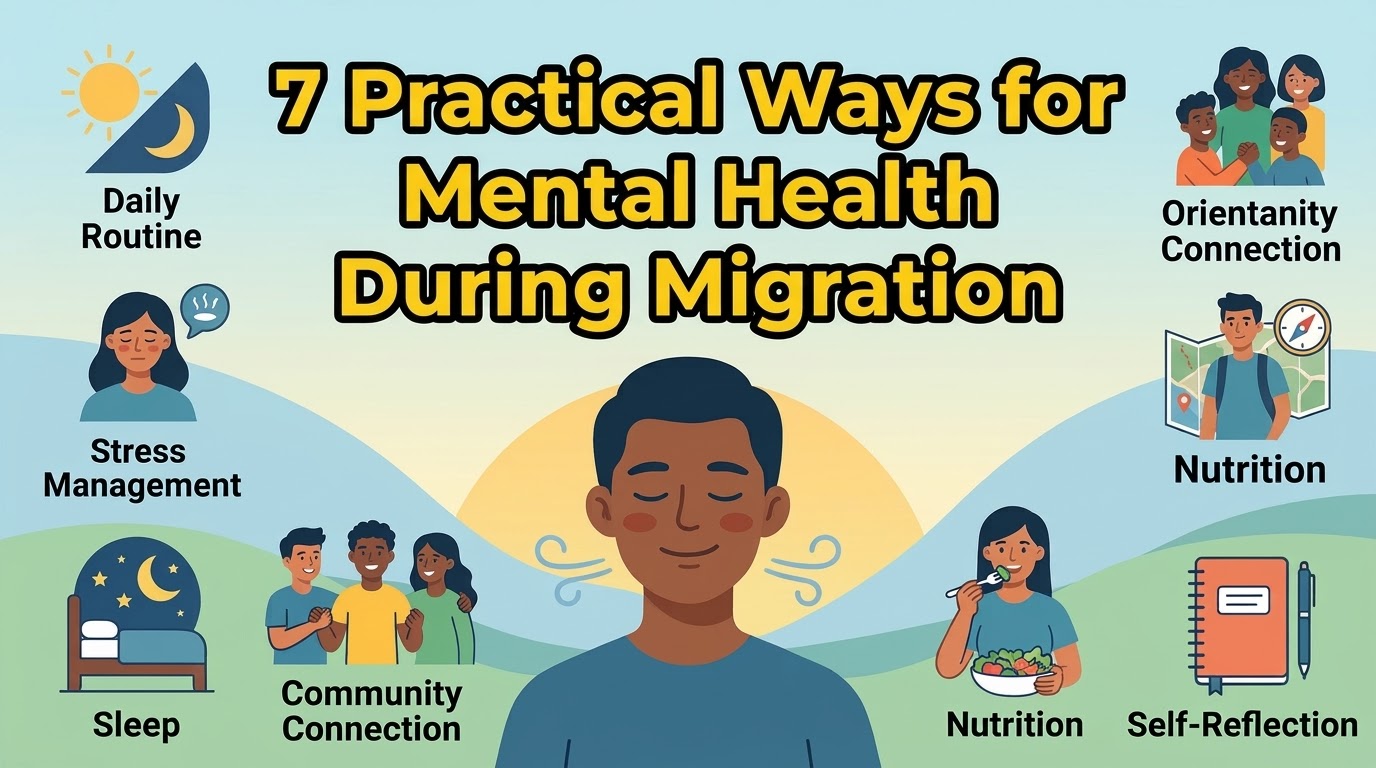
When life feels uncertain, small everyday actions can help you manage stress, maintain connections, and take better care of yourself.
Migration can bring many changes at once. You may be adjusting to a new environment, worrying about the future, or missing the people you love. Although you cannot control every circumstance, there are practical steps you can take to support your mental well-being.
- Focus on What You Can Control
When you have many unanswered questions, worrying about everything at once can become exhausting.
Write down your main concerns and identify one action you can take today. You might organize important documents, contact a relevant service, ask for reliable information, or complete a necessary task.
Some things will remain outside your control. Recognizing this can help you direct your energy toward what is possible now.
Ask yourself: What is one useful thing I can do today?
- Create a Simple Daily Routine
A predictable routine can provide a sense of stability when other parts of life feel uncertain.
Whenever possible, try to:
- Wake up at a similar time each day.
- Eat regular meals and drink enough water.
- Take a walk or engage in gentle physical activity.
- Set aside time for practical tasks.
- Include a few minutes of rest or an activity you enjoy.
Your routine does not need to be perfect. Even two or three consistent habits can help you organize your day.
- Use Simple Techniques to Manage Stress
When you feel overwhelmed, pause and bring your attention to the present moment.
Try this simple exercise:
- Place your feet comfortably on the floor.
- Notice five things you can see around you.
- Notice three sounds you can hear.
- Take a few gentle, comfortable breaths.
- Identify one thing you can do next.
This exercise may help you reconnect with your surroundings when your thoughts feel overwhelming. If it makes you uncomfortable, stop and try another approach.
Remember that calming techniques cannot remove difficult circumstances, but they may help you manage your immediate response to stress.
- Stay Connected With People You Trust
Talking to someone you trust can help you feel less alone.
Arrange regular calls with family or friends when possible. Share everyday experiences, not only problems. If you feel isolated, consider joining a local activity, language course, community group, or volunteering initiative.
You do not need to build close friendships immediately. Small, respectful interactions can be the beginning of meaningful connections.
- Make Space for Your Feelings
You may experience sadness, frustration, fear, hope, or homesickness. Instead of judging yourself for these feelings, try to recognize them.
Once a day, ask yourself:
- What am I feeling?
- What might be contributing to this feeling?
- What would help me right now?
You may need rest, practical information, a conversation, or professional support.
You do not have to pretend everything is fine. Acknowledging difficult emotions can help you respond to your needs more clearly.
- Take Care of Your Sleep and Physical Health
Stress can affect your sleep, energy, and concentration.
Where possible, maintain a regular sleep schedule, reduce stressful activities before bedtime, eat regularly, and include movement in your day.
If your thoughts keep you awake, write down your main concerns and identify one practical next step for the following day.
If sleep difficulties or physical symptoms persist, consider speaking with a healthcare professional. Not every physical symptom is caused by stress.
- Ask for Help When You Need It
You do not need to wait until you are in crisis to seek support.
Consider speaking with a qualified mental health professional if anxiety, sadness, sleep difficulties, or emotional exhaustion persist and interfere with your daily life.
If you are unsure where to begin, you can ask a trusted local organization about available services. If confidentiality is a concern, ask the provider to explain how your personal information is handled.
Seeking support is not a sign of weakness. It is a practical step toward protecting your well-being.
One Small Step Is Enough for Today
You may not be able to change your circumstances immediately, but you can begin by caring for yourself in small, realistic ways.
Choose one action from this article and try it today. Tomorrow, you can take another step.
You do not have to manage everything alone. Your mental health deserves attention, care, and support.
Looking for Psychological Support?
Pozitiv 365 – Mental Health Hub Preshevo offers psychoeducational information and a starting point for exploring psychological support.
Visit mentalhealthhub-presevo.com to learn more about available resources.
This article provides general psychoeducational information and does not replace professional psychological assessment or treatment. If you are in immediate danger or feel unable to keep yourself safe, contact local emergency services.