
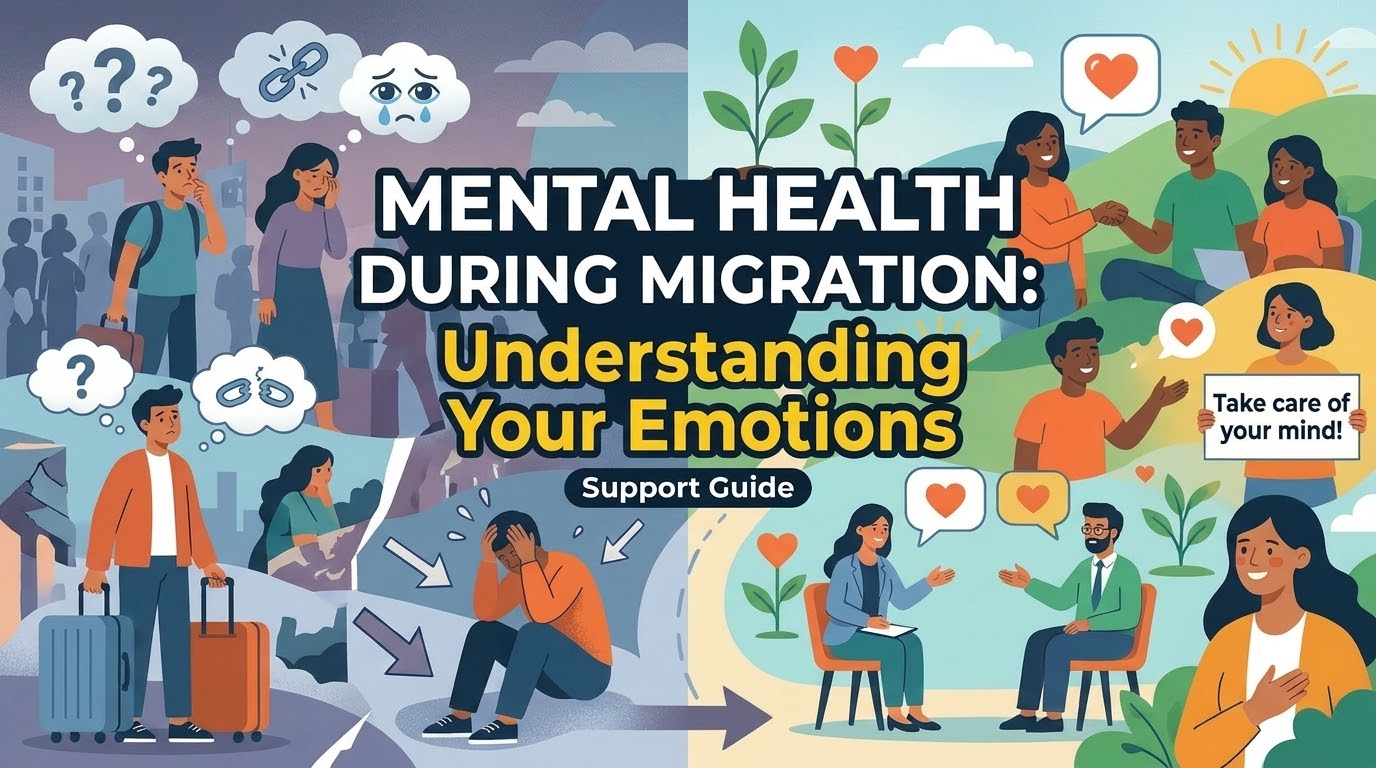
Migration can bring new opportunities, but it can also bring uncertainty, loneliness, and emotional challenges. Understanding your feelings is an important first step toward protecting your mental well-being.
When Life Changes, Your Emotions Change Too
Moving to a new place can mean leaving behind family, friends, familiar surroundings, and everyday routines. At the same time, you may need to adapt to a different language, culture, or way of life while dealing with uncertainty about the future.
You may feel hopeful one day and overwhelmed the next. You might worry about your family, struggle to sleep, or find yourself thinking repeatedly about things you cannot control.
These reactions do not automatically mean that something is wrong with you. They can be understandable responses to difficult circumstances and major life changes.
You can be grateful for new opportunities and still miss home. You can be hopeful about the future and still feel worried about today. Both feelings can exist at the same time.
The Emotional Weight of Uncertainty
One of the most difficult aspects of migration is not knowing what will happen next.
Questions about accommodation, employment, official procedures, or family reunification can create ongoing stress. When answers are unavailable, the mind may continue searching for solutions, making it difficult to relax or concentrate.
You may notice irritability, fatigue, headaches, sleep difficulties, or a feeling that you always need to be alert.
Try to remember that you do not have to solve every problem at once. Focus on what you can do today, while recognizing that some decisions depend on circumstances outside your control.
Loneliness and Separation From Family
Being physically separated from people you love can affect your emotional well-being. You may miss familiar conversations, family traditions, or simply having someone nearby who understands you.
Even when you are surrounded by other people, you may sometimes feel alone.
Maintaining contact with family and friends can help you preserve important relationships. At the same time, building new connections in your current community can create additional sources of support.
You do not need to share your personal story with everyone. Sometimes, a simple conversation, a shared activity, or a friendly interaction is a meaningful beginning.
Recognizing When You Need Support
People respond to stress differently. Some talk openly about their feelings, while others become quiet or withdraw from social activities.
Pay attention if sadness, anxiety, sleep difficulties, or emotional exhaustion continue for a long time or begin to interfere with your daily life.
Seeking psychological support does not mean that you are weak or unable to cope. It means that you are taking your well-being seriously.
A qualified mental health professional can help you understand your emotions, develop coping strategies, and identify additional support when needed.
You Are More Than Your Circumstances
Your migration journey is only one part of your life. You also have your own experiences, abilities, relationships, values, and hopes for the future.
You do not need to feel strong every day, and you do not need to have all the answers immediately.
Start by acknowledging what you are experiencing, recognizing your needs, and taking one manageable step at a time.
Your mental well-being matters, wherever you are and whatever circumstances brought you there.
Need Support?
Pozitiv 365 – Mental Health Hub Preshevo provides psychoeducational resources to help people better understand their mental well-being and explore available support.
Visit mentalhealthhub-presevo.com to learn more.
This article provides general psychoeducational information and does not replace professional psychological assessment or treatment.