
Stress is the body and mind’s response to demands or situations that feel difficult to manage.
Some stress can motivate us to act, but prolonged stress may affect sleep, concentration,
mood, relationships, and physical wellbeing. Migration can involve several sources of stress at
the same time, making it especially important to recognize early signs of overload.
Start by separating problems into two groups: things you can influence and things you cannot
control right now. Focus your energy on the first group. Break large tasks into smaller steps
and deal with one step at a time. Taking short breaks can also prevent stress from building
throughout the day.
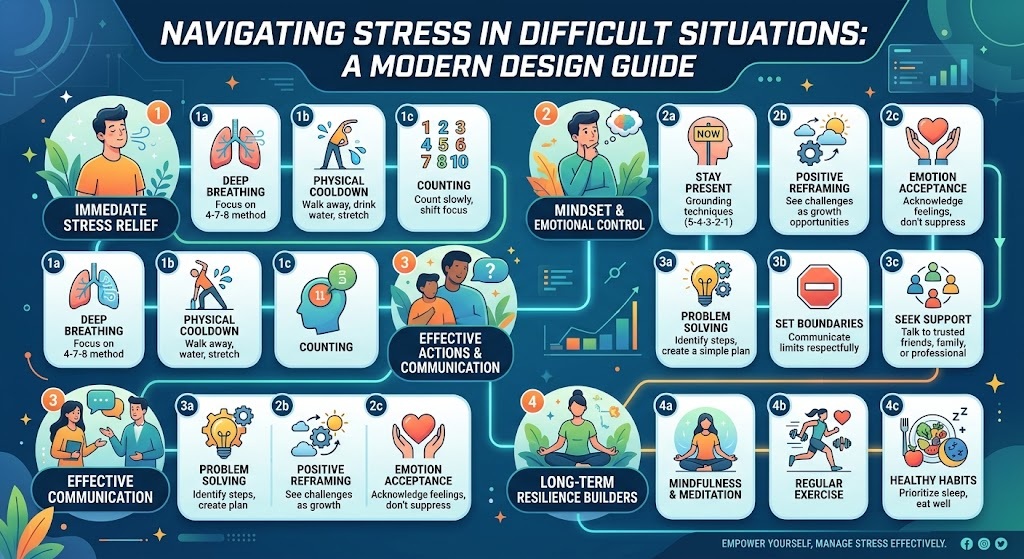
Physical activity, regular sleep, social support, relaxation exercises, and realistic daily planning
can support stress management. Try not to solve every problem at once. When stress
becomes overwhelming, talking to a trusted person or professional can provide additional
support and perspective.
Practical Exercises
- Write down your three biggest current stressors.
- Mark each one as: “I can influence this,” “I can partly influence this,” or “I cannot control
this right now.” - For one problem you can influence, write one small action you can take within 24 hours.
- Practice two minutes of slow breathing before starting a stressful task.
- Schedule one short break during the day and use it intentionally rather than continuing to
work or worry.