
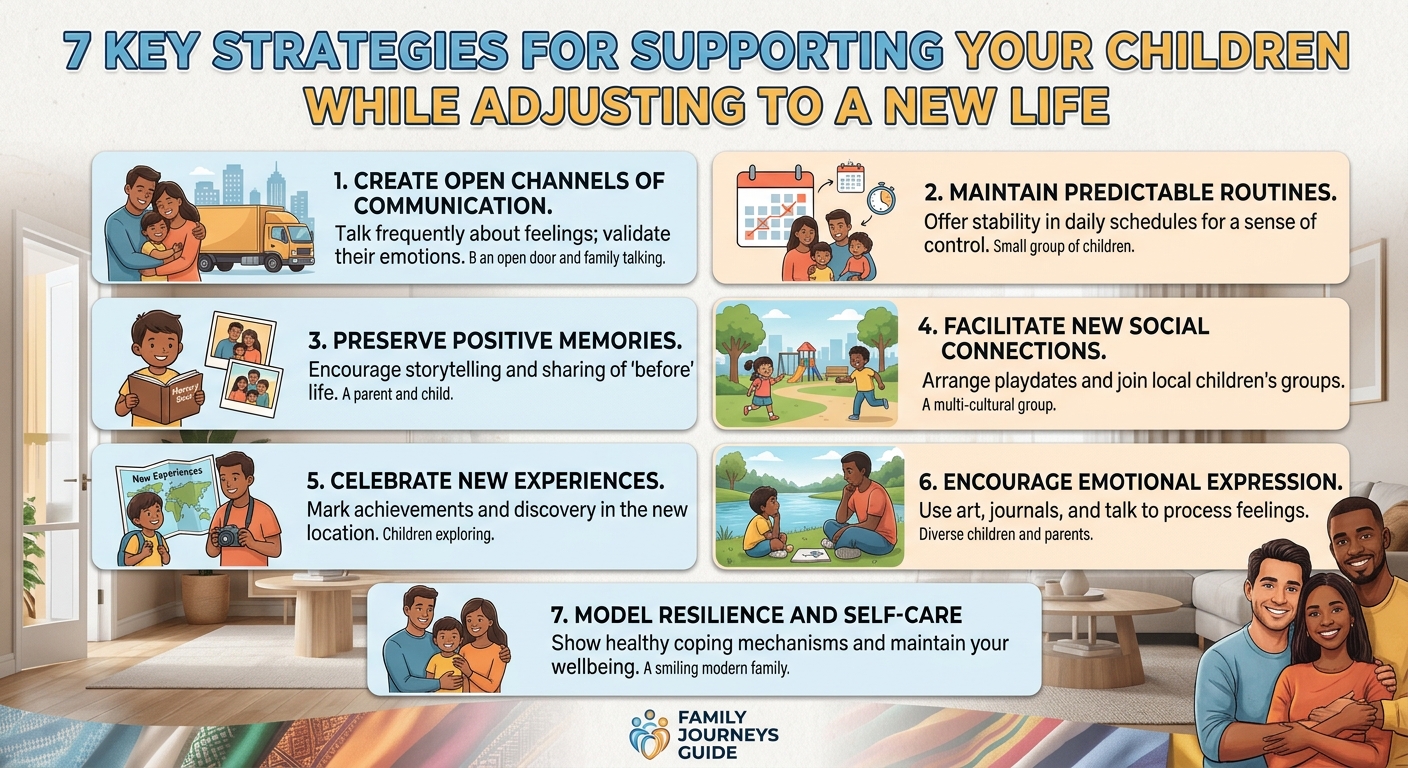
If you have migrated with children, you may be managing your own adjustment while trying to help them feel
safe and settled. Children may react differently to migration. Some adapt quickly, while others become quieter,
more irritable, clingier, or reluctant to attend school. Changes in language, friendships, routines, and family
relationships can affect their emotional wellbeing.
Practical steps you can take
- Create predictable routines. Regular mealtimes, bedtime rituals, and family activities can help children feel
secure. - Listen without dismissing feelings. If your child says they miss home, acknowledge the feeling instead of
telling them not to be sad. - Encourage questions. Give age-appropriate, honest answers about changes affecting the family.
- Maintain connections with loved ones. Arrange calls with relatives when appropriate and comfortable for your
child. - Help them build friendships. Encourage participation in school activities, sports, or other interests.
- Support language learning without pressure. Praise effort and avoid making your child feel embarrassed
about mistakes. - Preserve familiar traditions. Stories, food, music, and celebrations can help children maintain a sense of
identity. - Make time for individual attention. Even 10–15 minutes of uninterrupted time together can create an
opportunity for connection. - Notice changes in behaviour. Pay attention to persistent sleep problems, withdrawal, distress, or difficulties at
school. - Communicate with teachers. Ask the school about available educational or psychological support if your child is
struggling. - Keep adult worries with adults. Children need age-appropriate information rather than responsibility for adult
problems. - Take care of your own wellbeing. Supporting yourself can help you respond more calmly and consistently.
Try this today
Ask your child: “What has been the easiest part of living here, and what has been the hardest?” Listen carefully
and discuss one small thing that might make tomorrow easier.
Remember: A child’s adjustment may take time. If emotional or behavioural difficulties persist or
significantly affect daily life, consider consulting a qualified child mental health professional.