
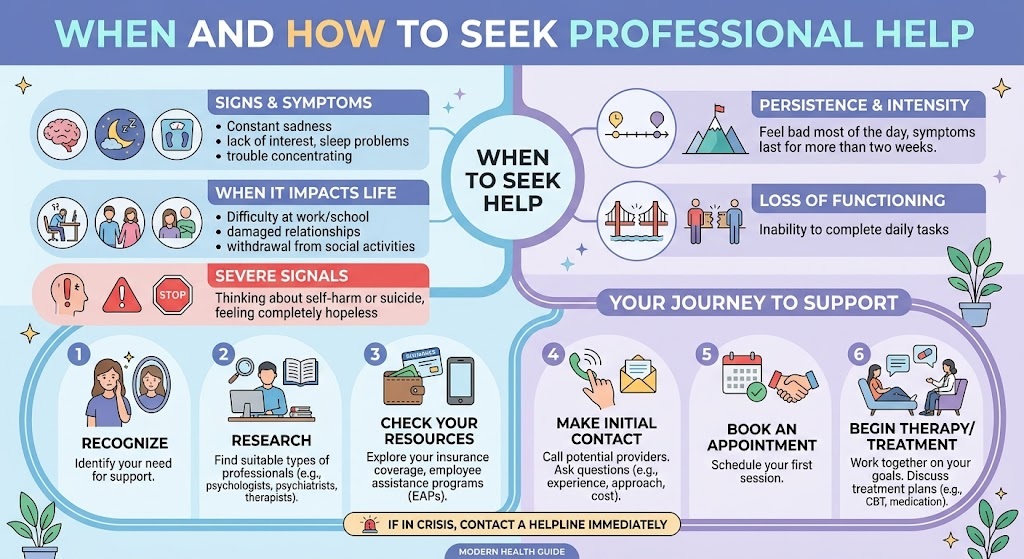
Seeking psychological support is a normal part of taking care of yourself. You do not have to
wait until difficulties become severe. A psychologist or other qualified professional can provide
a safe space to talk, help you understand your reactions, and work with you on practical coping
strategies.
Consider seeking support if sadness, anxiety, fear, sleep difficulties, traumatic memories,
anger, loneliness, or constant worry continue over time or begin to interfere with everyday
functioning, relationships, work, education, or self-care. Professional support can be especially
important when distress feels difficult to manage alone.
When seeking help, explain what you have been experiencing, how long it has been
happening, and how it affects your daily life. If language is a barrier, ask whether
interpretation or services in another language are available. In an immediate emergency or if
you feel at risk of harming yourself or someone else, seek urgent local emergency or medical
support.
Practical Exercises
- Write down the main symptoms or difficulties you have noticed and when they started.
- Identify how these difficulties affect sleep, work, relationships, study, or daily activities.
- Write down three questions you would like to ask a psychologist or healthcare
professional. - Identify one available local mental health service or trusted professional you could
contact. - Prepare one sentence you can use to ask for help: “I have been struggling with ___ and I
would like to speak with someone.”