
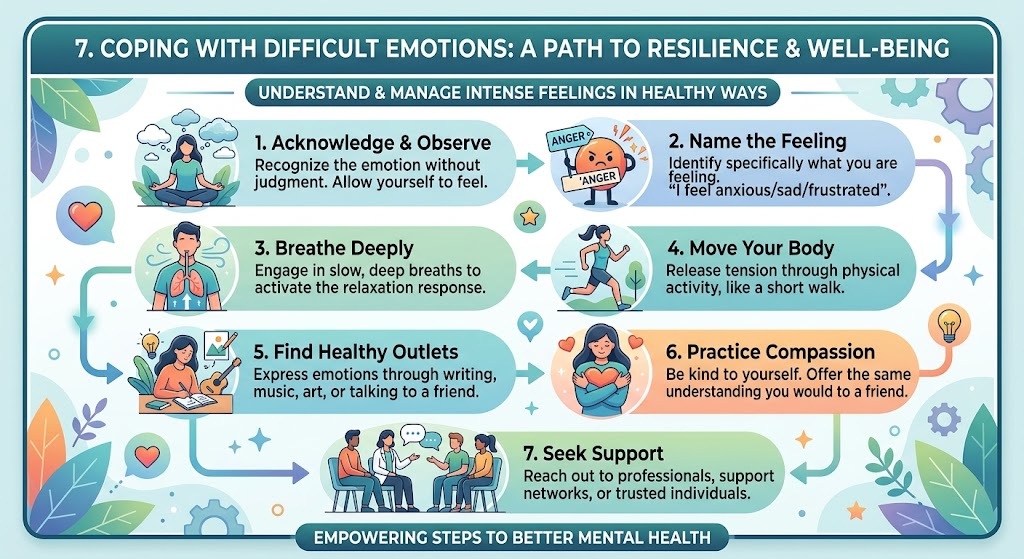
Migration can bring many emotions at the same time. A person may feel hopeful and worried,
grateful and lonely, excited and afraid. Difficult emotions do not need to be eliminated
immediately. Learning to recognize and express them in healthy ways can make them easier
to understand and manage.
Start by naming the emotion: “I feel sad,” “I feel worried,” or “I feel angry.” Naming an
emotion can create a little distance from it and help you understand what you need. Ask
yourself: What happened? What am I feeling? What do I need right now? The answer might be
rest, connection, information, safety, or simply time.
Healthy ways of coping can include talking with someone you trust, writing, walking, breathing
exercises, creative activities, prayer or other meaningful practices. Try to avoid coping
strategies that create additional problems, such as excessive alcohol or substance use or
complete social withdrawal.
Practical Exercises
- Complete the sentence: “Right now I feel… because… and what I need is…”
- Choose a healthy activity that helps you express emotions, such as writing, walking,
drawing, or talking. - Notice where you feel the emotion in your body without judging it.
- Ask whether the emotion is asking for action, rest, support, information, or time.
- At the end of the day, identify one emotion you experienced and what helped you cope
with it.