
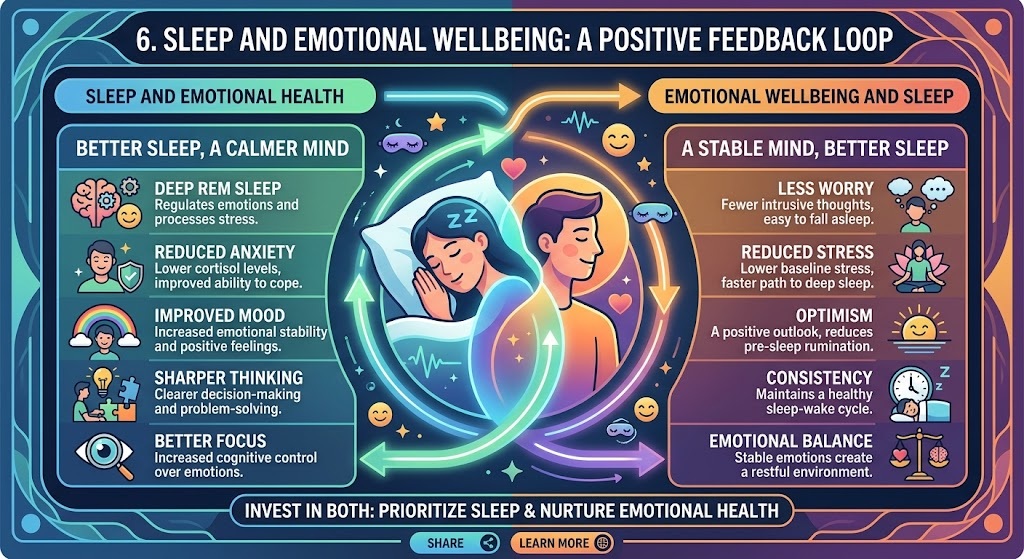
Sleep is closely connected with emotional wellbeing. Poor sleep can make it harder to
concentrate, regulate emotions, and cope with stress. At the same time, stress and uncertainty
can make falling asleep or staying asleep more difficult.
Try to keep a reasonably consistent time for going to bed and waking up. Create a calm routine
before sleep and reduce stimulating activities close to bedtime. If possible, limit caffeine later
in the day and avoid spending long periods on your phone while in bed. Daytime movement
and exposure to natural light can also support a regular sleep routine.
If worries appear at night, keep a notebook nearby and write them down. Tell yourself that you
can return to these thoughts during the day when you have more resources to address them. If
sleep problems continue for a prolonged period or seriously affect your daily life, consider
speaking with a healthcare or mental health professional.
Practical Exercises
- Choose a regular target time for going to bed and waking up.
- Create a 20–30 minute wind-down routine with quiet activities.
- Write down worries before bed instead of trying to solve them while lying in bed.
- Reduce caffeine later in the day and notice whether this changes your sleep.
- Keep a simple sleep diary for several days: bedtime, waking time, and how rested you
feel in the morning.