
Anxiety often involves worry about what might happen in the future. When people face
uncertainty, the mind may repeatedly imagine possible problems and prepare for danger. This
can make it difficult to relax, sleep, concentrate, or enjoy everyday activities.
When anxiety increases, first notice what is happening without judging yourself: “I am feeling
anxious right now.” Then ask whether there is an immediate problem that requires action or
whether your mind is predicting something that has not happened. If action is possible, choose
one small step. If there is nothing you can do at that moment, return your attention to the
present.
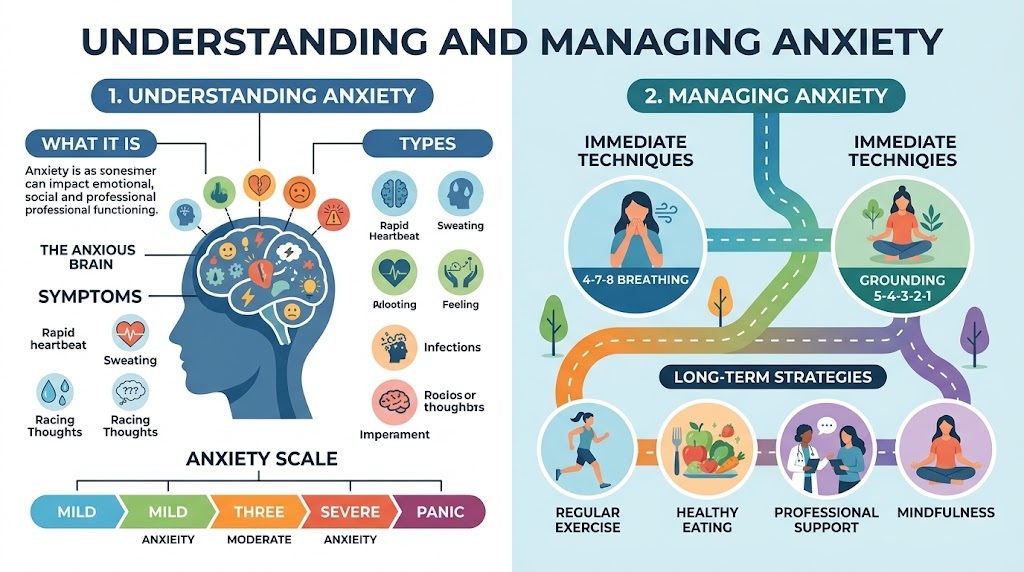
Grounding techniques can be useful. Look around and identify objects, sounds, physical
sensations, or details in your environment. Slow breathing can also help create a pause. If
anxiety is frequent, intense, or significantly affects daily functioning, professional support can
be helpful.
Practical Exercises
- Name the emotion you are experiencing without criticizing yourself.
- Write down the worry and then write: “What evidence do I have right now?”
- Ask: “Is there something I can do about this today?” If yes, identify one step.
- Use the 5–4–3–2–1 grounding technique: five things you see, four you touch, three you
hear, two you smell, one you taste. - Finish with one present-focused statement: “Right now, I am focusing on what I can do in
this moment.”