
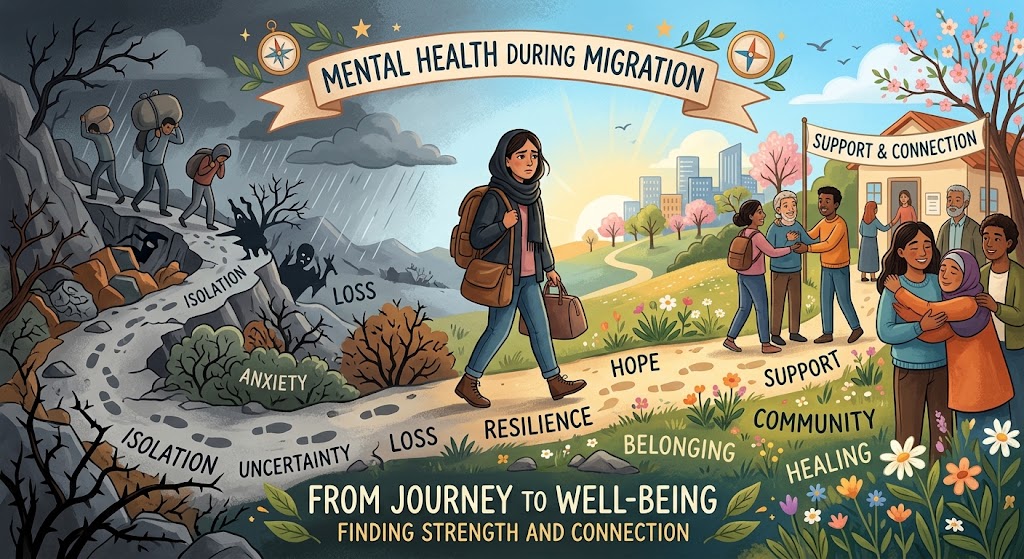
Migration is a major life transition. Moving to a new country can bring hope and new
opportunities, but it can also involve uncertainty, separation from family and friends, changes
in daily routines, financial pressure, language barriers, unfamiliar systems, and difficulties
adapting to a new environment. These experiences can affect emotional wellbeing and may
require time to adjust.
People may experience sadness, loneliness, worry, irritability, tiredness, difficulty
concentrating, changes in sleep, or feeling overwhelmed. These reactions do not automatically
mean that something is wrong with you. They can be understandable responses to prolonged
stress and significant change. Everyone adapts differently, and there is no single correct way
to experience migration.
Protecting mental health can begin with small, realistic steps. Try to maintain a daily routine,
stay connected with supportive people, eat regularly, sleep as well as possible, and include
some physical activity. Make time for activities that give you meaning or a sense of normality.
If emotional difficulties continue or interfere with everyday life, consider speaking with a
qualified mental health professional.
Practical Exercises
- Write down three things that currently give you a sense of safety, connection, or hope.
- Identify one daily routine you would like to make more regular, such as breakfast, a walk,
or bedtime. - Write the name of one person you can contact when you feel overwhelmed.
- At the end of the day, write one small thing you managed to do well.
- Ask yourself: “What do I need today?” Choose one realistic action based on your answer.